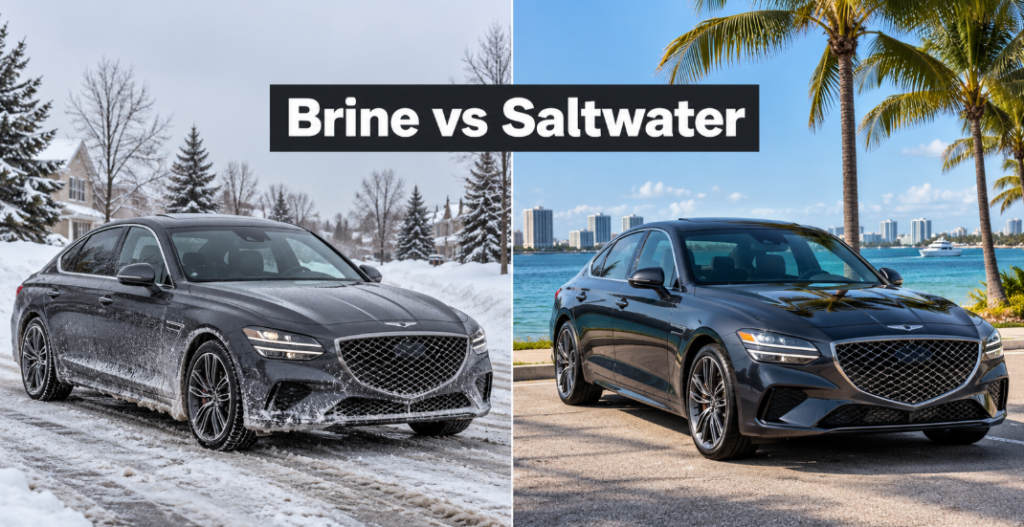


Winter road brine in Vaughan is usually worse for unprotected paint than Florida salt air. Brine sits on your car for months, stays wet, and travels with sand that chips your paint. Florida salt air is milder, but it lands on your car every day of the year. So brine hits harder, and salt air never takes a break. Bare paint loses in both places.
What the Latest Numbers and Experts Say
Here are the facts that matter most:
- Canada uses about 5 million tonnes of road salt each year, according to Environment and Climate Change Canada.
- Brine is salt mixed with water. A Transhield guide that cites the Washington Post says magnesium chloride brine stays wet even when humidity drops to about 20 to 30 percent. Plain rock salt stays dry until humidity climbs near 70 percent. Wet salt keeps working on your car until someone washes it off.
- In 2015, Transport Canada recalled about 3,000 BMW and Mini cars after salt de-icing damaged them at the Port of Halifax, based on a Montreal Gazette report.
- In Florida, a master mechanic told FOX 35 Orlando that ocean salt spray can drift about 60 miles in strong wind. He also said the side of a car that faces the sea breeze wears faster, and that salt water is acidic and eats into paint.
Those facts point to one idea. Salt does not need a beach to hurt your car. It only needs moisture, time, and bare paint.
How Vaughan Road Brine Attacks Your Paint
Brine Stays Wet on Your Car
Brine is a liquid. It sprays onto the road before a storm, and your tires throw it right back onto your doors, bumpers, and rocker panels. A drive down Highway 400 or Highway 407 on a slushy morning leaves a white film on your whole car.
That film does not dry out fast. It holds moisture against your paint and finds every tiny chip. Once it reaches bare metal, rust can start.
Sand and Grit Add Chips
Brine rarely works alone. Crews in Ontario often mix salt with sand and grit. Your tires kick that mix up at highway speed. Each small stone can chip your clear coat.
A chip is a door for salt. The brine flows into it, sits there, and spreads under the paint. One small chip in December can turn into a bubble by spring.
Freeze and Thaw Makes It Worse
Vaughan weather swings between freezing nights and mild days. Water gets into small paint cracks, freezes, and pushes the crack wider. Then the thaw brings more brine. This cycle repeats all winter.
A quick trip to Vaughan Mills or a slow commute through Woodbridge can cover your car in road spray. Short trips are the worst because the engine never warms up enough to dry things off.
How Florida Saltwater and Salt Air Attack Your Paint
Salt Spray Floats Inland
In West Palm Beach, the ocean sends salt into the air. Wind carries it over Flagler Drive, Clematis Street, and well past the coast. Tiny salt grains land on your hood, roof, and mirrors. They mix with morning dew and stay damp.
Transhield points out that living near the ocean creates a similar corrosive effect, especially on the front and rear of a vehicle, where spray settles and dries.
Sun and Heat Speed Up the Damage
Florida adds something Vaughan does not have in summer: strong, year-round sun. Heat bakes salt and rain spots onto your paint. Those spots can leave rings and small craters in the clear coat. Bare paint loses gloss fast.
Storm Season Brings Real Saltwater
During hurricane season, storm surge can push actual saltwater onto streets near Palm Beach Island and the Intracoastal Waterway. A car that sits in it can suffer damage far beyond the paint. The FOX 35 piece notes that saltwater can rot brake lines and other parts in a short time.
Most days, though, Florida paint faces a lighter threat than Vaughan paint does. It just faces it 365 days a year.
Brine vs. Saltwater: Side-by-Side
Factor | Vaughan Road Brine | Florida Salt Air and Saltwater |
How often | Winter months | All year |
How it hits | Direct spray from the road | Airborne mist, dew, rare flooding |
Stays wet? | Yes, even in dry air | Yes, in humid air |
Extra harm | Sand, grit, freeze and thaw | UV rays and heat |
Chip risk | High | Lower |
Hardest on | Lower doors, bumpers, hood edges | Hood, roof, mirrors, trim |
Verdict | Harsher per week | Slower but constant |
What the Damage Looks Like on Unprotected Paint
Unprotected paint shows the same signs in both places. Watch for these:
- Small chips on the hood and front bumper
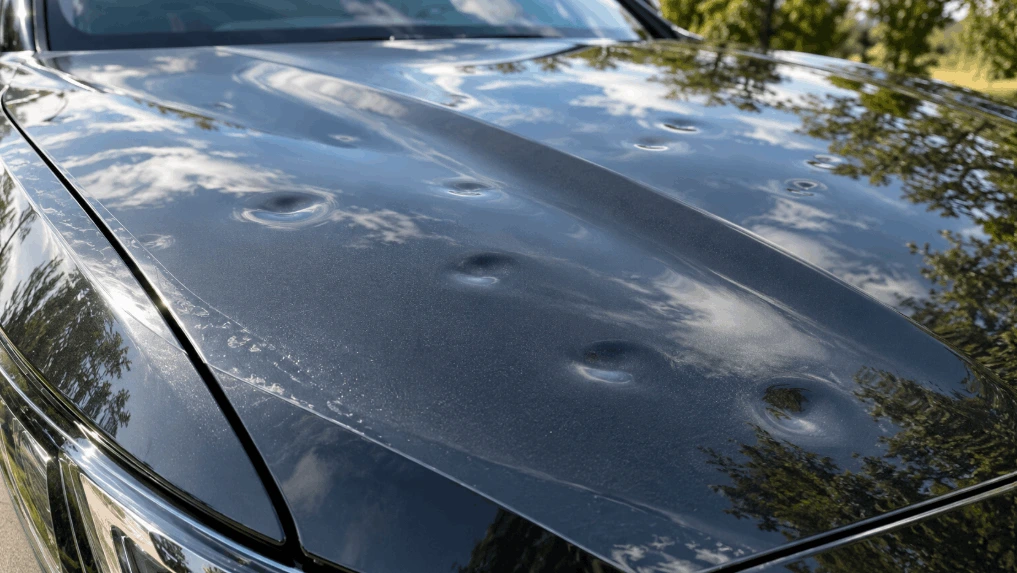
- Dull, hazy patches in the clear coat
- Water-spot rings that do not wash off
- Rust bubbles at door edges and wheel arches
- Peeling clear coat on older cars
- White salt stains in seams and trim gaps
In Vaughan, the damage often shows up in early spring, once the snow melts. In West Palm Beach, it builds slowly, and many owners only notice it after a year or two.
Why Washing Alone Does Not Solve the Problem
Washing helps. You should rinse salt off often, especially the lower half of your car. A good rinse beats no rinse.
But washing has limits:
- It cannot fix a chip that already exists.
- Brine returns the next day during a Vaughan winter.
- Harsh washes and gritty brushes can add tiny scratches.
- Wax wears thin fast under constant salt and sun.
Washing cleans the surface. It does not build a shield. To stop the damage, you need a physical layer between the salt and your paint.
How Paint Protection Film Shields Your Paint From Both
Paint protection film (PPF) is a clear, tough layer that sits on top of your paint. It takes the hit so your paint does not have to.
Here is what it does for you:
- Blocks chips. Sand and stones hit the film instead of your clear coat.
- Keeps salt off bare paint. Brine and sea salt sit on the film, not on your finish.
- Resists stains and spots. Bird drops, bugs, and water rings have a harder time etching in.
- Stays clear. You still see your paint color and shine.
- Makes washing easier. Salt film rinses off a smooth surface more easily.
Drivers in both places get real value. In Vaughan, PPF fights chips and brine. In West Palm Beach, it fights sun, salt mist, and spots.
Want to see what this looks like on your car? Learn more about professional PPF service in Vaughan and ask for a free quote before the first snow.
PPF Has Limits
Good advice needs honesty. PPF covers painted panels. It does not protect the underbody, brake lines, or frame. Those parts need regular rinsing and, in cold regions like Vaughan, rust proofing. PPF also does not replace washing. You still need to clean your car. The film simply makes that job easier and safer.
Simple Care Steps for Any Salty Climate
Follow these habits, with or without film:
- Rinse your car every week or two in winter.
- Rinse after beach drives or stormy days in Florida.
- Use a touchless wash when you can.
- Spray the wheel wells and lower panels first.
- Fix chips fast before salt gets inside.
- Park in a garage when possible.
- Dry your car after washing so salt and water do not sit.
The Best Time to Install PPF
In Vaughan: Install PPF in early fall, before crews start salting. Fresh film has time to settle, and your paint faces its first brine clean and protected.
In West Palm Beach: Any time works, but sooner is better. Salt air and sun start working on new paint right away. If you park near Singer Island or drive along the coast often, do not wait.
Already driving a new car in West Palm Beach? Check out expert PPF installation in West Palm Beach, FL and book a fitting before the salt does its work.
Why Choose The Armour Lab
The Armour Lab puts one thing first: protecting your paint with PPF. The team works with drivers in two very different climates, so it understands both sides of this debate. One shop deals with Ontario winters and road brine. The other deals with Florida sun and salt air.
That dual view helps. A Vaughan driver worries about chips from sand and brine on Highway 400 and Rutherford Road. A West Palm Beach driver worries about salt mist, heat, and storm season. The Armour Lab plans film coverage around those real risks, not a one-size-fits-all package.
You can expect clear talk about what PPF does and does not do. The team explains which panels matter most for your car, your daily route, and your budget. You get a straight answer, not a hard sell.
If you live in Vaughan, Woodbridge, Kleinburg, or nearby, you can book through the Vaughan team. If you live in West Palm Beach, Palm Beach Gardens, or along the coast, the Florida team is ready for you. Reach out today for a quote and get your paint ready before salt season hits.
Conclusion
Winter brine in Vaughan usually does more harm to unprotected paint in less time. Florida salt air does less harm each week, but it never stops. Both attack chips, clear coat, and bare metal. Regular rinsing helps, and a protective film adds a real barrier. The smartest move is to shield your paint before the damage starts.
Real FAQs
Road brine usually does more harm in a shorter time, but ocean salt air hurts all year.
PPF protects painted panels from chips and salt contact, but it does not cover the underbody.
Rinse it every one to two weeks, and sooner after heavy slush.
Not fully, because wind can carry salt far from the coast.
Book in early fall, before the first road salting starts.